Maybe the nearest office with an opening is forty minutes away, and by the time you got home from a session it would already be time to start dinner. Maybe you have tried therapy before, and the version that actually happened was the one that did not require a coat, a commute, and a waiting room first.
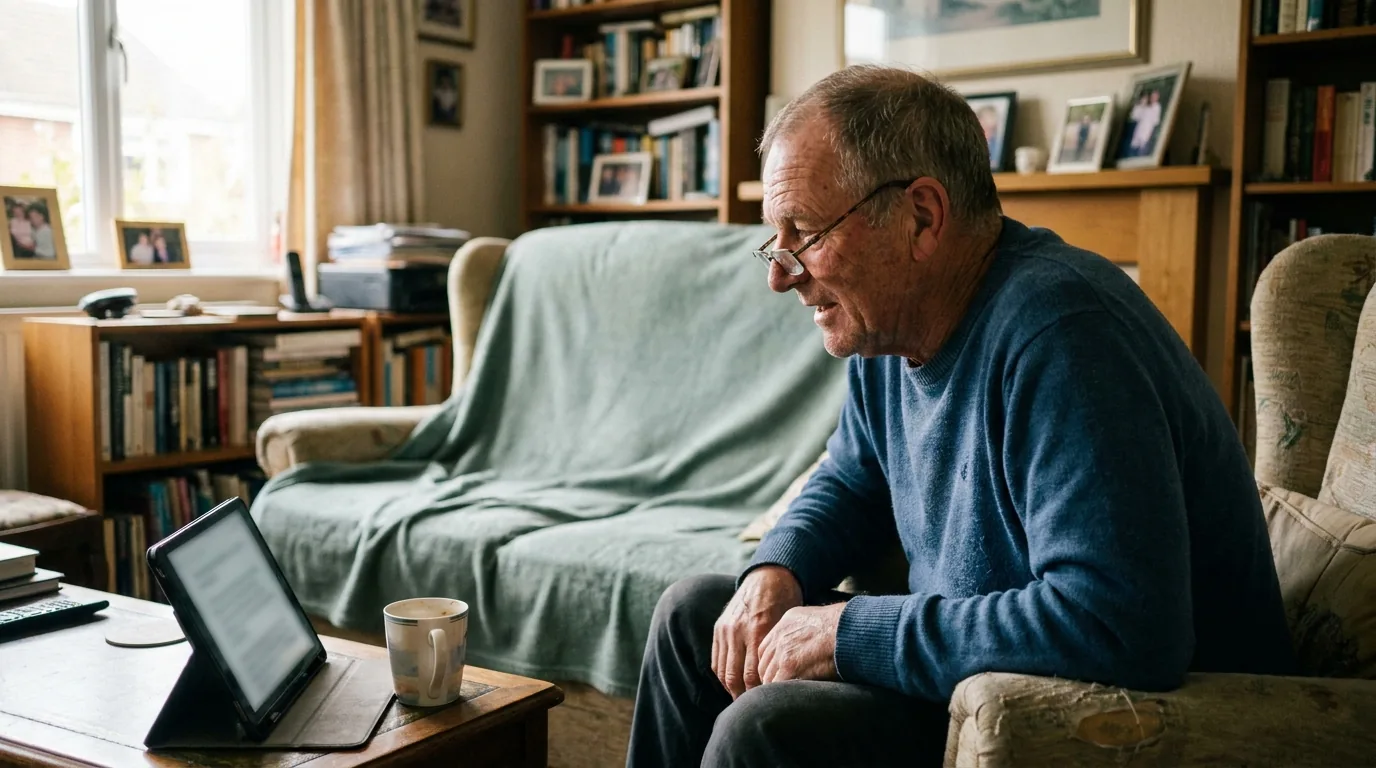
You do not have to choose between getting support and getting through your week. Your therapist sees clients by secure video from anywhere in Ohio or Florida — the same clinical care, minus the drive.
How Telehealth Works Here
A telehealth session runs on the same schedule as an in-office one — Tuesday through Thursday evenings, 6 to 9pm — booked the same way. You get a private, secure video link ahead of time, log in from wherever you are, and the session itself looks like any other conversation, minus the waiting room and the drive home in the dark.
Curious whether it fits your week? Book a free 15-minute consultation to talk it through before committing to anything.
Statewide Access, and What "HIPAA-Compliant" Means
Because your therapist is licensed in Ohio and registered with the State of Florida to provide telehealth there, telehealth is available to you from anywhere in Ohio or Florida — Akron, Hudson, Cuyahoga Falls, Columbus, wherever you happen to be. The teletherapy rules in Ohio and in Florida require only that the client be physically located in Ohio or Florida at the time of the session, and that the treating clinician be licensed in that state (Ohio Admin. Code 4757-5-13). If you live outside easy driving distance of Stow, telehealth removes the drive-time ceiling entirely.
The same rule requires informed consent that spells out, in plain terms, the risks and confidentiality issues specific to remote sessions, and requires that any electronic communication between client and therapist be securely transmitted and stored (Ohio Admin. Code 4757-5-13). Federally, any provider offering telehealth must comply with the HIPAA Privacy, Security, and Breach Notification Rules governing how protected health information is handled (HHS) — the same confidentiality that applies in the office applies on video.
What You Need on Your End
Nothing complicated:
- A computer, tablet, or smartphone with a camera and microphone
- A reasonably stable internet connection
- A private space where you will not be interrupted or overheard — a parked car or a closed bedroom door both work
- Headphones, if privacy at your end is a concern
No downloads to troubleshoot, no technical fluency required.
Does Online Therapy Actually Work?
It is a fair question, and the evidence-based answer is yes, for most people, most of the time. The American Psychological Association states plainly that "teletherapy, including services delivered via telephone or videoconferencing, has been shown to have similar outcomes to traditional, in-person therapy," with effectiveness demonstrated for anxiety, depression, PTSD, and adjustment difficulties among other concerns (APA). A 2022 study comparing 2,384 adults in matched intensive outpatient and partial hospitalization programs — half treated in person, half by telehealth — found no significant difference in symptom reduction or quality-of-life outcomes between the two groups (Bulkes, Davis, Kay & Riemann, 2022), and in a national survey reported by APA's own Monitor on Psychology, 96% of responding psychologists said telehealth is effective therapeutically (APA Monitor, 2022). For a fuller look at the research, including where it gets more nuanced, see Does Online Therapy Actually Work?
Bilingual, By Video Too
Sessions are available in English or Spanish by telehealth, exactly as in person — a genuine advantage if the language you think and feel in is not the one most online therapy defaults to.
What This Costs
Telehealth sessions are priced the same as in-office ones. The practice is in-network with many major insurance plans — including Aetna, Cigna, Medical Mutual, and UnitedHealthcare, plus Medicare and Medicaid — and the billing team files claims directly. Prefer self-pay? The first, longer session is $145, and each session after that is $135. If your plan is out-of-network, a superbill is provided after every session for reimbursement. The Fees & Payment page walks through the full structure.
If You Are Working Through Something Serious Right Now
Telehealth therapy is not built for real-time emergencies, and neither is this page. If you are having thoughts of harming yourself or someone else, or you are in immediate danger, call or text 988 to reach the 988 Suicide & Crisis Lifeline, free, confidential, and available 24/7 (988lifeline.org), or call 911.
Not Ready to Book Yet?
That is reasonable. Read what to expect when you're getting started, check the FAQ page for logistics, or learn about bilingual and Spanish-language therapy.
When you are ready, book a free 15-minute consultation — a short, no-pressure call by phone or video. Serving Stow, Akron, Hudson, Cuyahoga Falls, and Summit County in person, and Ohio and Florida by telehealth.