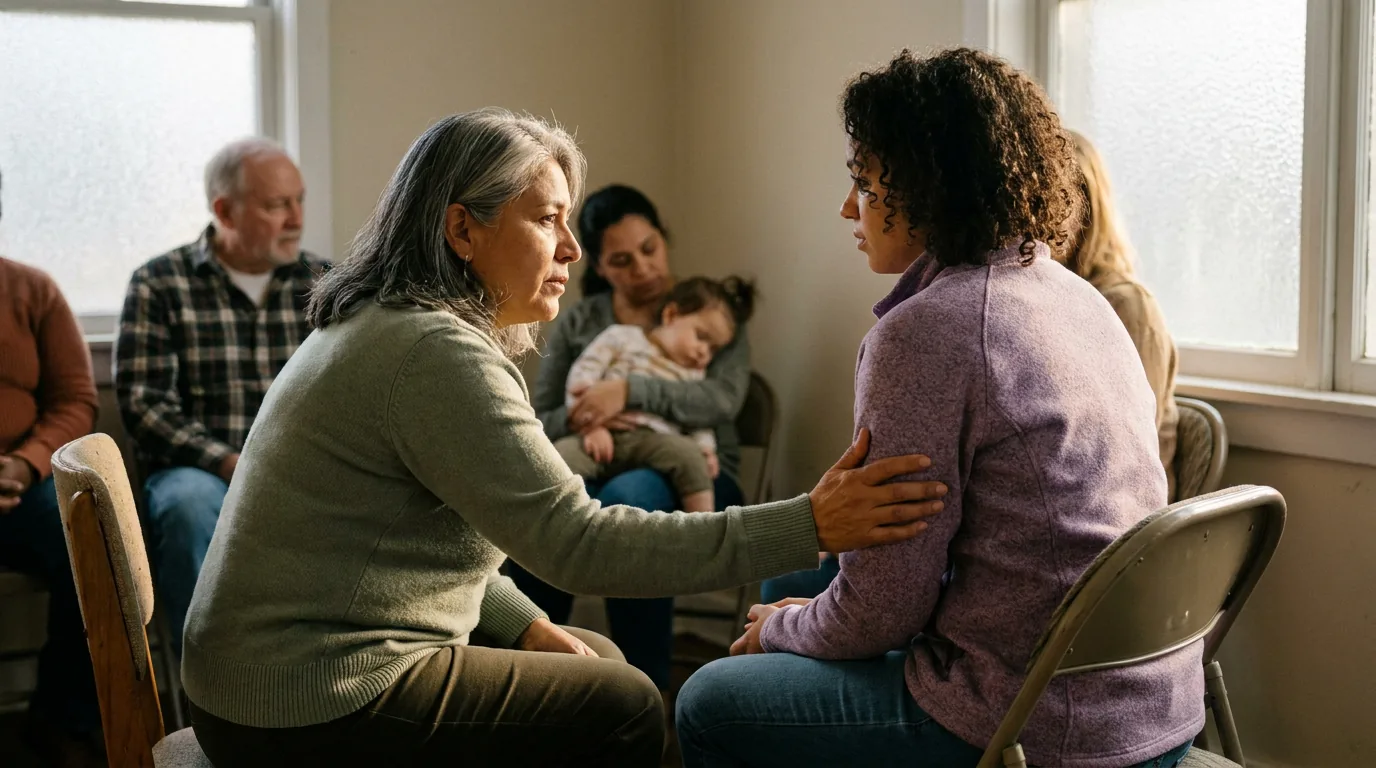

There is a particular kind of relief in a room where you don't have to explain the whole thing from the beginning. Group therapy puts you among people working through something you recognize — and that recognition, running in both directions, is a large part of the work itself.
A group is not a lecture, and it is not an open support meeting. It is facilitated, led by a licensed clinician (LISW-S), drawing on the same Cognitive Behavioral Therapy (CBT) and Solution-Focused approach used one-on-one. What changes is where the insight comes from — it stops being only the clinician's.
Groups also tend to do something individual work cannot do on its own: they show you that what you are carrying is not the strange exception you had assumed it was. That alone changes how people talk about themselves.
Confidentiality is central to how a group works, and it's explained clearly — what's expected of everyone in the room, and where the limits are — before you join anything.
Group focus and availability change over time. Reach out and we'll tell you what is running now and whether it fits what you are working on — and if it doesn't, we'll say so and point you somewhere better.